
Deciding how your teenager will straighten their smile is a big moment for any parent. You want results that last, a treatment that fits their busy life and an experience that feels positive from start to finish. For many families, Invisalign Teen is a great fit, but it isn’t the right answer for every smile.
At Master Orthodontics, Dr. Carlos Caballero and our team guide families through this decision every day. Below, you’ll find straightforward answers about Invisalign Teen, how it compares to braces, how families pay for it and how to tell if your teen is a strong candidate.
What Is Invisalign Teen?
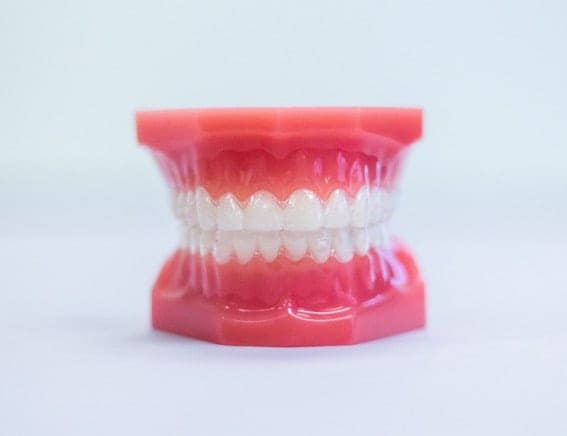
Invisalign Teen is a clear aligner system designed specifically for teenage patients who are still growing. It uses custom plastic trays, worn over the teeth, to shift them into alignment gradually. Teens switch to a new set every one to two weeks, and the aligners include features built just for younger smiles.
So what makes it different from standard Invisalign? Invisalign Teen includes blue compliance indicators that fade with proper wear, giving you and the orthodontist a quick visual check on how often the trays are being worn. The aligners also feature eruption tabs that leave room for molars that haven’t finished coming in yet.
This treatment works well for a wide range of smiles. It can address crowding, spacing, overbites, underbites and other mild to moderate bite concerns. As an Invisalign® VIP provider in the top 1% of providers worldwide, Dr. Caballero has the experience to plan Invisalign Teen cases with precision.
How Invisalign Treatment Works for Teens
Invisalign Teen treatment follows a clear, predictable path. Your teen will visit our practice for a smile analysis, wear a series of custom aligners for several months and finish with retainers to protect their new smile.
Here’s what to expect:
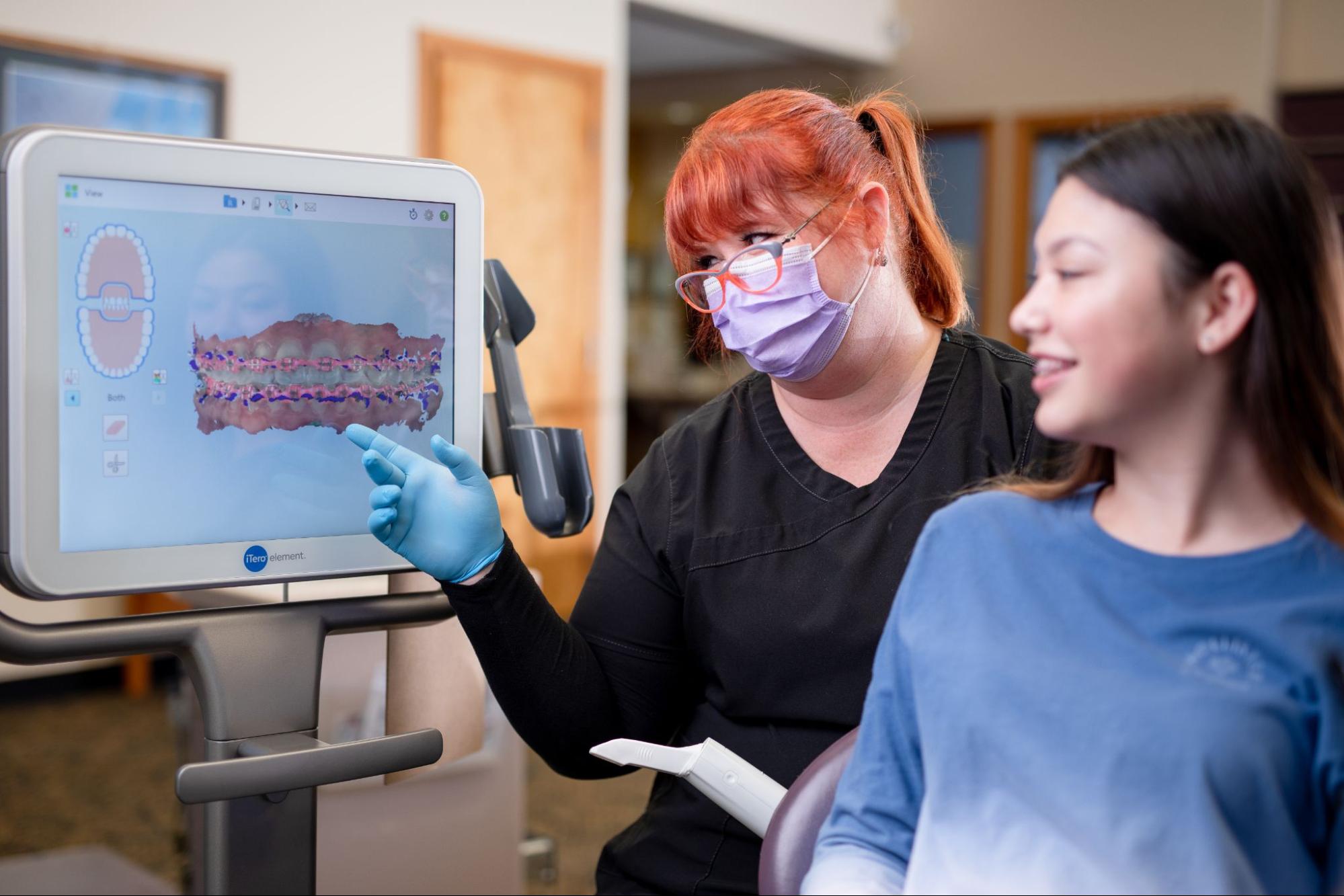
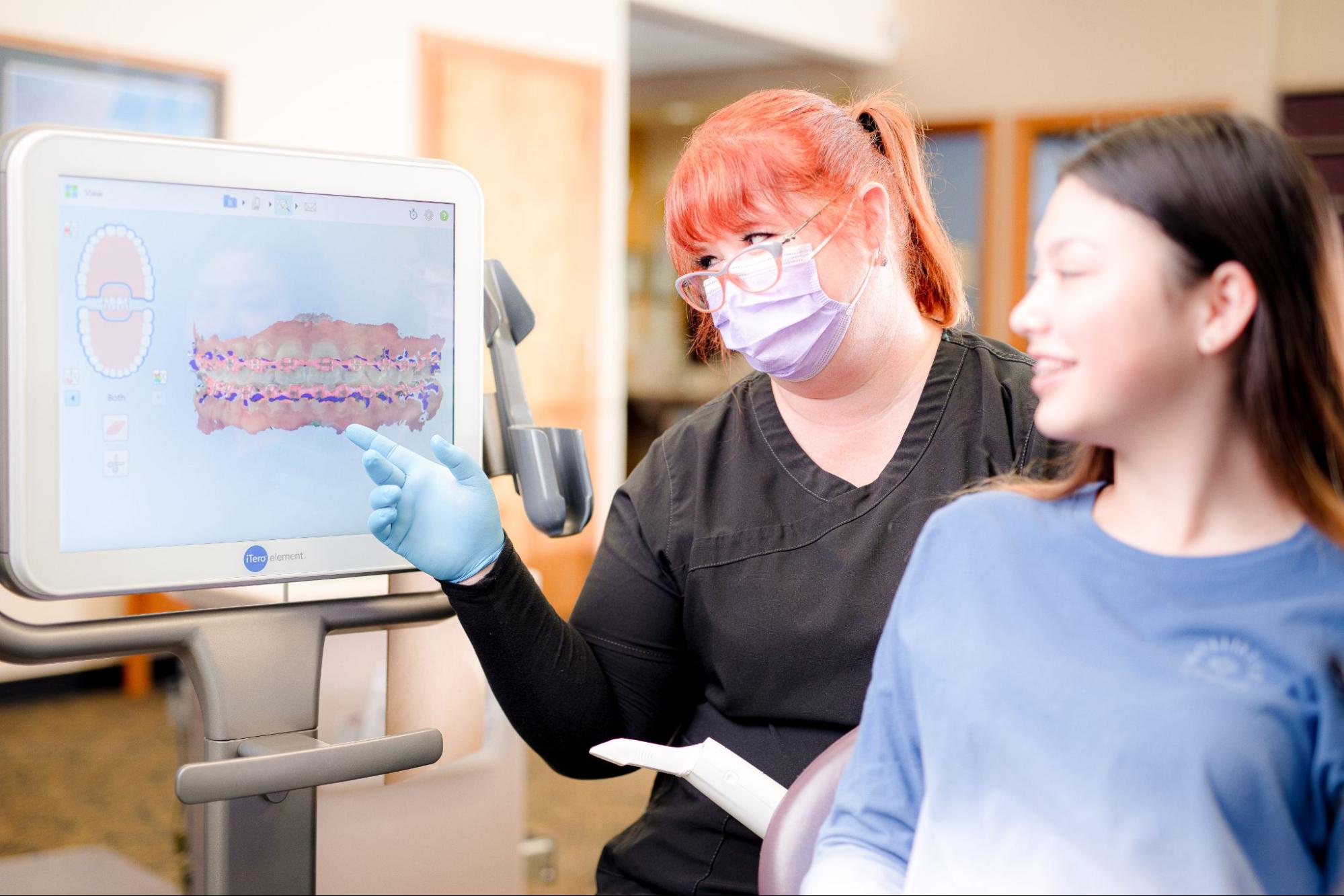
- First visit and smile analysis. Your teen meets Dr. Caballero for an exam and a digital scan of their teeth, which maps every tooth without messy impressions.
- Custom treatment plan. Using the scan, we build a digital preview of how your teen’s teeth will move, step by step, so you can see the planned result before treatment begins.
- Aligners arrive and treatment starts. Your teen wears the trays 20 to 22 hours a day and only takes them out for meals, snacks, brushing and flossing.
- A new set every week or two. Each set applies gentle, targeted pressure to move specific teeth. The changes are small, which keeps treatment comfortable.
- Regular check-ins. Every several weeks we track progress, hand off the next aligners and make adjustments if needed. These visits are usually quick.
- Retainers for the long haul. After active treatment, retainers hold everything in place so your teen’s smile stays where it belongs.
Throughout the process, the blue compliance indicators give parents and our team an honest look at wear time. Our post on how we monitor progress with clear aligners explains what we look for at each visit.
Benefits of Invisalign for Teenagers
Invisalign Teen offers real advantages for both parents and teens. The aligners blend into daily life in ways metal braces can’t, and they make oral hygiene easier at an age when consistency can be tough.
How do aligners support a teen’s confidence and lifestyle?
- Nearly invisible appearance. The clear trays are hard to notice in photos, in class or at prom. Teens who feel self-conscious about braces often feel more confident in aligners.
- Removable for the moments that matter. Your teen can take them out to eat lunch, play a wind instrument or enjoy a team meal after practice. Since the trays come out to eat, popcorn, apples and corn on the cob stay on the menu.
- Comfortable fit. Smooth plastic is gentler on cheeks and lips than metal brackets, especially during sports and active days.
What makes Invisalign easier for parents to manage?
- Easier brushing and flossing. Because the trays come out, your teen can brush and floss normally, which supports healthier gums and cleaner teeth during treatment.
- No broken wires or brackets. With braces, a snapped wire or loose bracket means an extra trip to the office. Aligners don’t have those parts to break.
- Quick check-ins. Most appointments are short progress checks that fit more easily into a packed school year.
- Built-in compliance tracking. The blue indicators fade with proper wear, so you can tell at a glance whether your teen is on track.
For teens balancing school, sports, music and a social life, these benefits add up to a treatment that feels less disruptive for the whole family.
Invisalign Teen vs. Traditional Braces
Both Invisalign Teen and traditional braces can create a beautiful, healthy smile. The best choice depends on your teen’s lifestyle, the complexity of their bite and how reliably they’ll wear aligners. Here’s how the two compare.
| Feature | Invisalign Teen | Traditional Braces |
|---|---|---|
| Appearance | Clear, nearly invisible aligners | Visible metal brackets and wires |
| Wear time | Up to your teen, 20 to 22 hours a day | Always on |
| Comfort | Smooth plastic, minimal irritation | Brackets and wires can rub at first |
| Food | No restrictions, trays come out to eat | Avoid sticky, hard and crunchy foods |
| Oral hygiene | Brush and floss normally | Takes extra care around brackets |
| Office visits | Quick progress checks | Regular wire adjustments |
| Best for | Mild to moderate cases and motivated teens | Complex bite correction and severe rotations |
| Sports and instruments | Removable for activities | Mouthguard needed, wind instruments take practice |
| Treatment time | Often 12 to 24 months | Often 12 to 24 months |
For teens who play contact sports, perform in band or care a lot about how their smile looks in photos, aligners are often a strong fit. For complex orthodontic needs, traditional or clear braces may deliver a more predictable result. If you’re still weighing the two, our guide on whether braces or Invisalign is right for you goes deeper.
Paying for Invisalign Teen
The cost of Invisalign Teen depends on how complex your teen’s case is and how long treatment will take. We’ll give you a clear, personalized estimate at your smile analysis so there are no surprises.
Here’s how families commonly cover treatment:
- Orthodontic insurance. Many dental insurance plans contribute toward orthodontic care for dependents, and our team will help you understand your benefits before treatment begins.
- HSA and FSA funds. Pre-tax dollars from a health savings or flexible spending account can often be used for orthodontic treatment.
- Flexible payment options. We offer in-house payment plans, including 0% financing, as well as CareCredit for families who qualify.
- Medicaid and Apple Health. Master Orthodontics accepts Medicaid and Apple Health, and we’re the only provider in the area who does. Coverage depends on medical need, so learn more in our guide to Medicaid and orthodontic care.
Affordability should never stand between your teen and a healthy, confident smile. Our team will walk you through every line item and answer questions about coverage so nothing feels confusing.
Is Your Teen a Good Candidate for Invisalign?
Not every teen is ready for Invisalign, and that’s okay. The best candidates share a few traits, and this checklist can help you decide whether it’s worth exploring at your teen’s first visit.
Good signs:
- Most permanent teeth have come in. Invisalign Teen leaves room for molars that are still erupting, but most adult teeth should be in place.
- Your teen is responsible and motivated. Wearing aligners 20 to 22 hours a day takes commitment. Teens who stay on top of homework and daily routines usually do well.
- The case involves mild to moderate concerns. Crowding, spacing and simpler bite issues are typically good fits.
- You’re ready to be a supportive partner. Parent check-ins, especially early on, help teens build the habit of consistent wear.
Signs braces may be the better choice:
- Complex rotations or severe bite issues. These may be better served by traditional braces or a combined approach.
- Teens who often lose or forget things. If your teen struggles to keep track of a mouthguard or retainer, aligners may be a challenge.
The best way to know for sure is to schedule a smile analysis. Dr. Caballero will evaluate your teen’s bite, review the digital scan and recommend the option that will deliver the best long-term result. Families come to us for Invisalign in Port Orchard and Bremerton, and every plan starts with that first conversation.
Frequently Asked Questions
How many hours a day must teens wear Invisalign?
Teens need to wear their aligners 20 to 22 hours each day for treatment to stay on track. That means removing them only for meals, snacks, drinks other than water and brushing. Consistent wear is the biggest factor in finishing on time, and building the habit in the first week makes the rest of treatment much smoother.
What happens if my teen loses an aligner?
Call our office right away. Depending on where your teen is in the current tray cycle, we may have them move to the next set early, go back to the previous tray or order a replacement.
Will Invisalign affect my teen’s speech?
Some teens notice a slight lisp during the first few days as their tongue adjusts to the trays. This usually fades within a week. Reading out loud or practicing conversation at home can speed up the adjustment.
How long does Invisalign Teen treatment take?
Most Invisalign Teen cases finish in 12 to 24 months, though the exact timeline depends on the complexity of the case and how consistently your teen wears the aligners. Simple spacing cases may wrap up faster, while more involved bite corrections may take longer. Dr. Caballero will give you a projected timeline at the smile analysis so you know what to expect from day one.
Can my teen play sports or instruments with Invisalign?
Yes, and it’s one of the biggest advantages. Aligners can be taken out for contact sports and replaced with a mouthguard, then put back in afterward. Wind instrument players often find aligners easier than braces because there are no brackets in the way. Just be sure to store the aligners in their case, not wrapped in a napkin where they can get thrown out.
Is Invisalign as effective as braces for teens?
For the right case, yes. Invisalign Teen can deliver results comparable to traditional braces when it’s worn as directed. Case selection and consistent wear make the difference. For mild to moderate needs and a motivated teen, aligners work very well. For complex cases involving severe rotations or major bite correction, Dr. Caballero may recommend braces for the most predictable outcome, and our team will walk you through the reasoning so you feel confident in the plan.